The piece begins with poems my father wrote, read aloud, recorded, and then read again and again, and again. Each pass feeds back into the last: the recording is distorted and noisified until the words wear down into pattern, cadence, static. The content of the poems isn't the point. What matters is the act of repetition itself, entering the rhythm of his words until meaning gives way to texture.
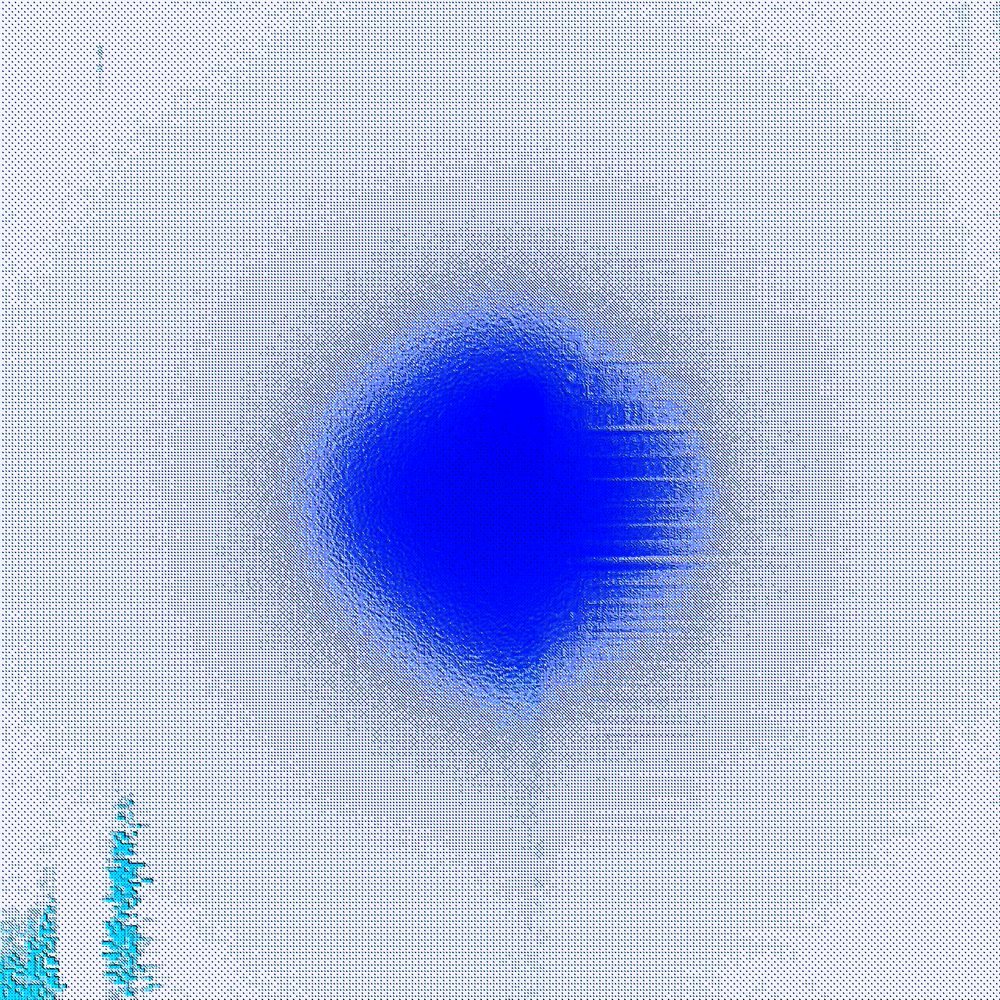
The visual layer is generated out of the resulting noise: an abstraction built on top of an already-abstracted voice, a face given to a sound that no longer resembles speech. It doesn't illustrate the audio so much as grow out of it, shaped by the same distortion that erodes the words.
noise poems treat repetition as a kind of erosion and a kind of intimacy at once. reading a father's words until they stop being legible is still a way of staying inside them. The noise isn't a failure of the signal, it's what's left of the voice once everything but its rhythm has worn away.